
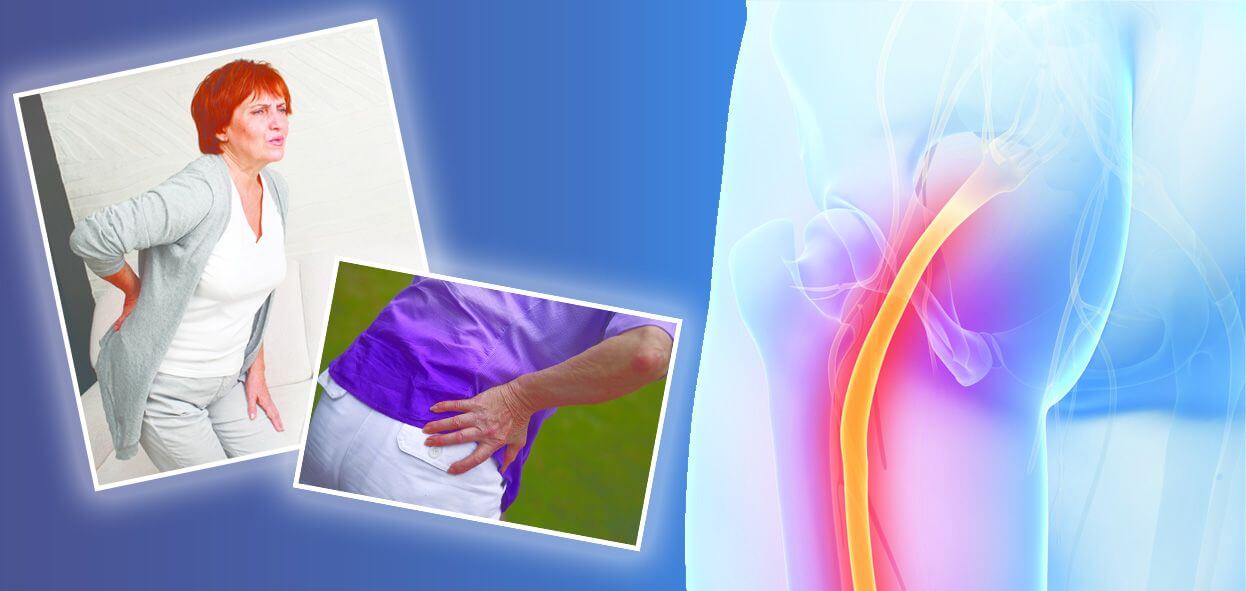
Sciatica describes pain felt along the sciatic nerve, which runs from your lower back, down through the buttock, hamstrings and into the lower leg. The sciatic nerve is the longest nerve in the body. Sciatica is characterised by pain, numbness, and weakness in the legs. Commonly pain and numbness are located at the calf, foot, or back of the thigh. This is usually preceded for a few weeks by lower back pain. Eventually the leg pain becomes worse than the back pain. Pain can either be dull and aching or can be a shooting pain down the leg all the way to the toes. This pain can last for several days or weeks or it can subside for even a few hours. However, someone who has had sciatica for a long period of time will find that the pain localises in the buttock and thigh. In severe cases it can damage nerves and reflexes or cause the calf muscle to deteriorate. All patients are unique with their pain and presentation. While the diagnosis of sciatica is reasonably simple, the primary cause of your sciatica may require further investigations to eliminate or confirm its origin. It is also important to determine how significant your sciatic nerve has been compressed. Pressure on the Sciatic nerve can result from a number of reasons including:
- Tightness of the piriformis muscle in the buttock that compresses the sciatic nerve
- Spinal/vertebral dysfunction
- Herniated disc, disc prolapse
- Osteoarthritis
- Poor posture – prolonged sitting, poor mattress
- Poor lifting technique and poor bending habits
- Spinal compressions due to osteoporosis
It is very important that the patient is an active participant in the treatment process and understands the importance of staying active. Physiotherapy Treatment main objectives are;
- Reduce pain
- Restore movement
- Strengthen weakened muscles
- Reduce tension
- Prevent a recurrence
This is achieved by using a combination of the following techniques:
- Mobilisation to help relieve pain and improve function
- Massage to help reduce muscle tension and pain and improve blood flow
- Dry needling/Acupuncture promotes healing and pain relief
- Electrotherapy such as ultrasound, laser, interferential, TENS
- Hot and cold packs to reduce pain and stiffness
- Advice in relation to how to minimise pressure and irritation of the sciatic nerve – teaching correct postural techniques, and exercises to correct any muscle imbalance in the spine
- Posture supports, lumbar roll
- Exercise prescription to stretch and strengthen the muscles of your back, shoulders, and stomach to help increase your flexibility, strength, and balance. The physio may teach you an exercise program so you can do it at home.
- Patient education – self-management techniques will ultimately help you to achieve your goal of safely returning to your previous sporting or leisure activities without sciatica.
- Rehabilitation is very important to prevent the pain from becoming chronic. Many patients are relieved from their sciatica after a 4 to 5 visits and some patients benefit in maintaining care regularly because it keeps their bodies in optimum condition.
Physiotherapists are a key healthcare professional to treat Sciatica. If you are suffering from sciatica seek help early, the longer delay in starting the treatment, the longer time it takes to recover.